Friday, September 25, 2009

Congressional Earmarks: What Are They?

The process of Congressional earmarking has received heavy news coverage in recent months, as U.S. citizens evaluate the effectiveness of government spending projects. Situations like the “Bridge to Nowhere” in Alaska and Senator Mitch McConnell’s personal charity appropriations have drawn attention to the lack of transparency and potential moral hazards that accompany the earmarking process. The following brief document provides an explanation and history of earmarking, along with a summary of the more significant criticisms of the practice.

Definition

Earmarking is the process by which members of Congress allocate budgeted money toward a specific program or project. They can be added to the Congressional Appropriations Budget or inserted into any bill as line items. Proponents of earmarks claim that they enable members of Congress to intelligently direct funds where they are most needed among their constituents, instead of deferring to the Executive Branch to allocate expenditures in potentially wasteful ways. The process of logrolling, or the inclusion of reciprocal earmarks, allows the sponsor of a bill to solicit support from other members of Congress; in effect “purchasing” a vote in exchange for an earmark.

History

While earmarking occurred as early as 1817, the practice was not widely seen until the 1980’s. The chart to the right shows that between 1996 and 2008, annual earmarks grew from 958 to 14,093. Incidentally, the total annual spending by lobbyists rose from $1.44 billion in 1998 to $3.30 billion in 2008.

Since the 110th Congress, the earmark process has been more tightly regulated: members must post their earmarks on a website and declare that they have no personal interest in the request. In addition, the OMB and private groups such as WashingtonWatch.com are expanding efforts to catalog and monitor earmarking behavior. The additional transparency and accountability from these efforts


Criticisms

While earmarks total only two percent of the Federal budget, critics argue that earmarks pose a significant moral hazard to the legislative process: lobbyists often give large donations to the campaign funds of members of Congress in order to secure earmarks. Since until recently, earmarks were usually inserted anonymously into legislation, they were also a convenient way to secretly award loyalty or punish enemies.

Since a member of Congress may insert a budget earmark for projects outside his/her geographical jurisdiction, lobbyists who are rejected by officials from one state are often able to secure funding from members in a different state. For example, Congressman Dan Young from Alaska earmarked $10 million to fund the construction of a highway interchange in Florida. Further research revealed that Congressman Young received a $40,000 campaign donation from the developer of the property. Behaviors such as this will hopefully be reduced by recent and future reforms.

Saturday, September 19, 2009

On Not Finishing a Book

Are you the kind of person who checks out dozens of books and only reads a few of them? When I go to the library I feel like a hungry man at an all-you-can-eat buffet: I know that I can only eat so much, and I regret that I can't try everything. I still put too much on my plate, knowing that I will throw away half of it, but I just can't stop trying new foods.


I have been chipping away at a fascinating book about a journalist's travels through Iran, and I was very annoyed the other day to receive an email reminder from the library, telling me that the book was due. I felt this pang of regret, knowing that life would move on and I would probably never finish the book--it would go on the ever-growing pile of unfinished projects, partially-read books, and abandoned hobbies.


Just when I was about to sink into one of those bouts of self-pity I had a realization: Do you have to finish a book to enjoy it? Maybe not. I don't have to know someone's life story to have a meaningful discussion with them. I met a guy from Mali yesterday; we had a great discussion for a few minutes and then went on with our lives. He didn't ask me about my third-grade teacher, and I didn't get his position on Kanye West, but I would still call the conversation a success.


I wonder if we're just too hard on ourselves. I think we often forget that Sherlock Holmes and Hermione Granger are not real people--we don't have to become an expert in everything we're interested in, complete every project we begin, or finish every book we check out. There are so many hours in a day, and when you think about it, years in a life.


I was falling asleep last night, going through the frantic "did I forget anything today" to-do list, and remembered my late library books. I thought to myself, "I met a fascinating book the other day." It was okay that I didn't finish it--there were millions of books still waiting for me, and I would probably meet a few tomorrow.

Jamaican Food


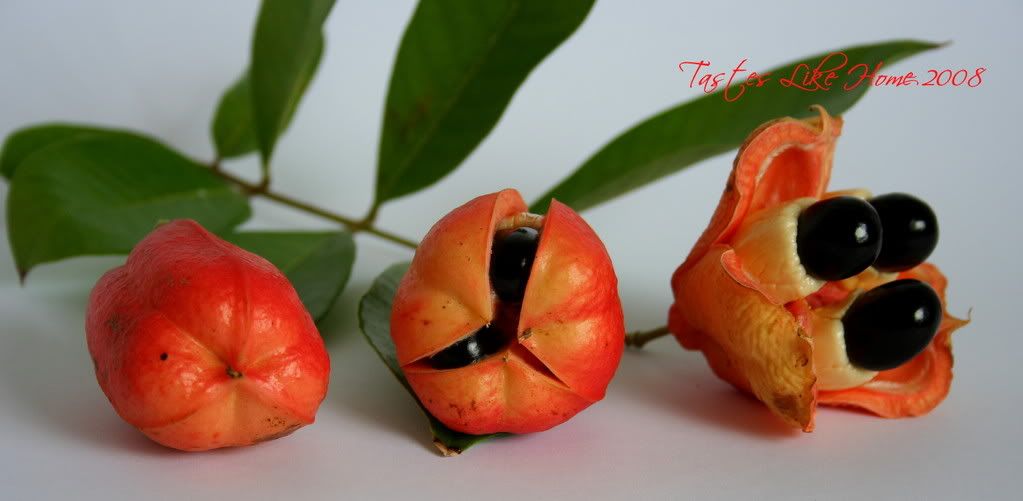
I was browsing around the other day and found this recipe for a Jamaican dish called "ackee and saltfish." It is the national dish of Jamaica, and contains peppers, onions, flaked fish, and ackee, a very strange fruit that apparently resembles and tastes like scrambled eggs!

I decided that I had to try it. I went to an ethnic grocery store looking for ackee, but to no avail. The dish is usually made with salted cod, I assume because two hundred years ago the ships would bring cheap dried fish

from Boston in exchange for sugar cane and rum. Now the cod probably comes from Norway. I settled for two large fillets of frozen grey sole. They were beautiful, white fillets that didn't smell fishy at all.

When I got home I marinated the fish in lime juice, salt, pepper, paprike, and a little allspice (what's Jamaican food without allspice?).

I let that sit awhile and sautéed two bell peppers with an onion and some cayenne pepper in butter. I threw in some thyme, salt, and pepper.

Meanwhile, I cooked the fish and flaked it with a fork. Once it was done I tossed in the vegetables, then scrambled five eggs and gently mixed them in.

For the sides, I nuked a sweet potato for a few minutes, then sliced it up and browned it in butter with salt and pepper. We had a can of mangosteens, so we added them on the side.
Our house smelled wonderful! It was a combination of caramelized onions, thanksgiving yams, and a hint of fried eggs.

I have to put in a note about mangosteens: I've only had them canned, but they are supposedly the most delicious fruit in the world. They look like white peeled tangerines. Each little section tastes halfway between a pear and a grape, with brilliantly sweet citrus overtones. At $4 it was easily the most expensive part of the meal, but definitely worth it.

This was a memorable meal, and very cheap. The fish and eggs went wonderfully with the onions and peppers. The sweet and salty yams provided a wonderful foundation, and a bite of mangosteen added a bit of tang at the end. We fed five people for about $10.

Tuesday, August 18, 2009

Take Back Your Yard

I'm reading a fascinating book called Mirrors of the Unseen: Journeys in Iran, that paints a fascinating picture of Persian culture and scenery. I was stuck by his description of a visit to Isfahan, an ancient city surrounding a public square. Around sunset the writer noticed everyone in the city spreading out blankets in the square. He asked his taxi driver what they were doing and was told "same thing they do every day--eating dinner! Many of them sleep out there too."

After reading that I pictured the standard American family, at best gathering around a dinner table together, at worst eating McDonalds on the couch while watching Friends episodes, and I felt a little lonely. American families are so sequestered, with their social time often scheduled and planned, and I wondered if most Americans secretly long for a simpler, more spontaneous existence.

My wife and I live in an apartment complex with nine other families, and I regret to admit that we barely know most of them. The Isfahan story touched a chord in us, and we decided to make a few changes:

Hold more barbecues--these are no-stress, semi-impromptu barbecues where we provide the fire and everyone brings their own food. We held one the other day and it was great. We even got one of our lesser-known neighbors to come outside and join in.

Put Out the Hammock--I've had this hammock in storage for years and never used it--what a shame! I hung it the courtyard and have been spending more time outdoors recently.

Picnic on the Lawn--We want to start eating dinner on a blanket in the yard. Not only do we have friends frequently walking by, we might be able to get some of our neighbors to join in. It's also fun to eat or season your food right out of the garden.

Yesterday afternoon I was getting a little tired of being indoors, so I went outside to read in the hammock. I'm noticing an interesting shift in my mental processes--I now consider the yard as part of my living space. You usually place a mental wall around the area you designate as "home", and now that wall encompasses the outdoor spaces around our apartment as well. I feel like I've taken my yard back.

Tuesday, July 28, 2009

Grocery Co-op: Cut Your Grocery Bill in Half

We recently discovered our local grocery co-op, and I think it's an amazing way to save money on food. In case you don't know what that is, it's a group of people who pool their money together to buy something straight from a wholesaler in order to save money.

Once a month, the co-op puts together a basket of various groceries and you call in and tell them how many baskets you want (a basket usually includes three kinds of meat, four kinds of fruit, five veggies, and some other stuff). Near the end of the month the co-op places the order directly from wholesalers and distributes it to various drop-off locations. Then you just show up at your local drop-off location and pick up your food.

We have been participating in our local food co-op for three months now, and we just love it. The food is very high quality and we end up paying about half what we normally would at the grocery store. There's a variety of different items and it changes every month, so it's kind of an exciting surprise to see what you will get.

I would highly recommend joining a food co-op. Here's an online directory if your interested: http://www.coopdirectory.org/

Simplifying the Food in Your Life

In a recent blog post I outlined our current problems with food. Basically, we spend too much for it, waste a lot of it, and often opt for fast food whenever we don't feel like cooking.

Being unemployed means we have to downsize our budget, but we see it as an opportunity to start eating inexpensive, simple, healthy food instead of the expensive chemical creations we pick up at the golden arches.

I went on a research trip to Maine a few months ago, and while we were eating sandwiches at this little cafe I noticed the quaint little chalkboard set up with the menu scrawled on it. For some reason that stuck in my mind, and I realized that it was the solution to our food problems--we could keep track of our food on a menu board.

We went to Home Depot and bought a sheet of marker board masonite for $13 and cut it into a few manageable pieces. I found some double-sided adhesive tape and mounted the piece of marker board on the wall next to the fridge. Voila!

We took inventory of our food, listing the meats, fruits, breads, etc. in different sections of the menu board. We also added a section for leftovers so we'd make sure to eat them. We try to keep it updated as we use stuff, but we erase the board and take inventory again once a week.

The menu board has really simplified our cooking. Instead of planning dinner we look at the board and throw together whatever looks good--we might microwave some yellow squash and toss it with pasta and a quickly-sauteed chicken breast and a pear on the side, or we'll broil some cheese on thick pieces of toast with Italian sausage and dice up some peaches and celery sticks to eat with it. Dinner usually takes us all of 15 minutes to prepare and clean up, and it's usually much healthier than what we used to eat.

This also saves us quite a bit of money on groceries. Instead of planning meals and buying those ingredients, we just buy whatever's on sale to fill up slots on the board. Our shopping list might look like this:

milk
eggs
2 bread
3 veggies
4 fruits
2 meat
cheese

and we just look for inexpensive options for each of those.

Another benefit of this is that you can do interesting ethnic foods. We just had a Mexican week--we shopped at one of those really cheap hispanic markets and ate Mexican food--made our own refried beans and ate everything on tortillas. We might do an Asian week next.

Friday, July 17, 2009

David Dunn - Try Giving Yourself Away

I think there must be a universal impulse in man to collect things, and often strange things (I just read a news article about a Belgian who opened up a museum to display his collection of the underwear of famous people.) I have been bitten by the collector bug many times throughout my life, at different times collecting baseball cards, postage stamps, coins and banknotes, rare books, minerals, and I anticipate soon--insects. (I used to think my collecting habits were out of control until I discovered that my brother harbors an irrepressible urge to collect road signs.)

When I was twelve my parents noted my penchant for hording the exotic, and in an effort to promote collecting activities that didn't make a disaster of my room they gave me a book called Try Giving Yourself Away. It catalogs the rather unique collection of a man named David Dunn, who made a hobby of doing small, usually secret acts of kindness. I read the book with delight, as it brought a new, hoard-able thing into my life.
Mr. Dunn relates with pleasure the little, every-day opportunities he discovers to make people around him happy: he'll compliment someone he sees on the street, or give someone a ride home in his car; once he bought some hungry children bags of popcorn from a street vendor; he wrote a letter to his local postmaster thanking him for going out of his way to get a package delivered to him. Most of the things he did were easy and inexpensive, or free, and I'm sure he derived at least as much satisfaction from them as I did from any of my baseball cards.

I won't jump on a soapbox and say that I immediately set out to build a collection of charitable memories, but every once in awhile I'll remember the book and try to do some small thing for someone: I'll let someone with a gallon of milk ahead of me in the supermarket line, or listen attentively as a friend describes in detail something I'm not necessarily interested in. I won't get on a soapbox and claim that this happens constantly, or even that it's a natural impulse, but every once in awhile the book comes to mind and I'll usually see someone in my immediate surroundings who presents an opportunity to add to my uncatalogued collection.

I was hunting around online and just found a free digital version of the book. It was written in the 1940's, so it's in the public domain now. As a little gift to you, here is the link:

http://www.archive.org/details/trygivingyoursel031988mbp